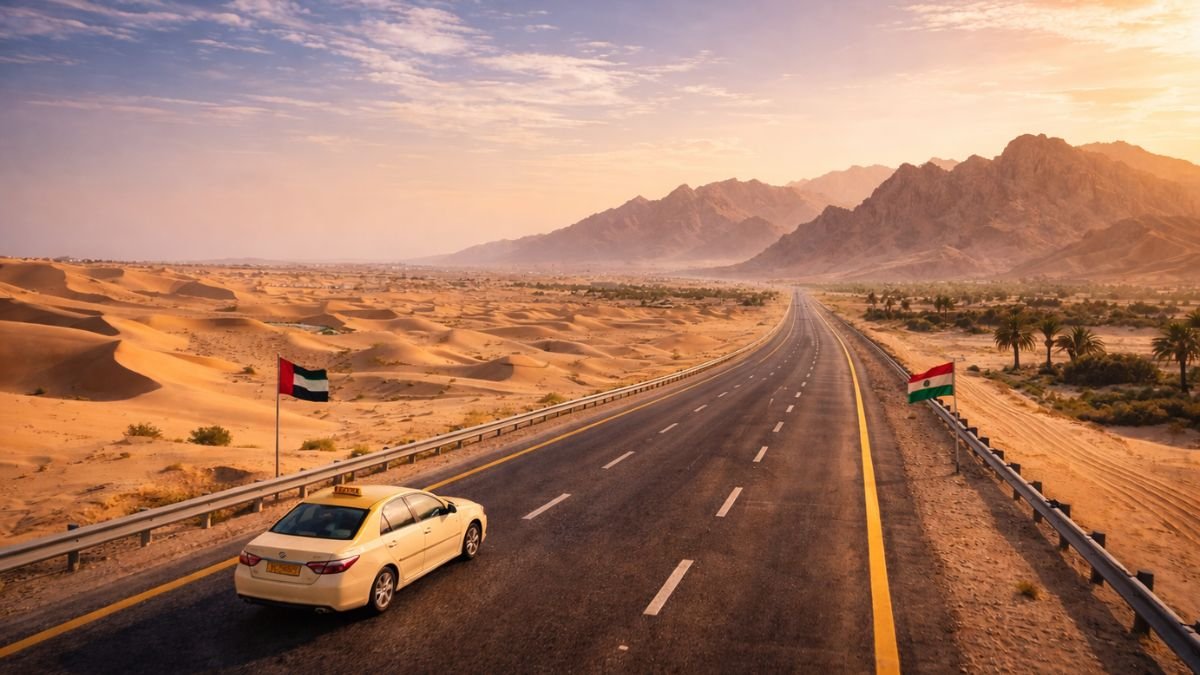
With flights across the region operating under significant disruption and uncertainty right now, the Dubai to Oman land route has become one of the most important travel corridors for UAE residents. The good news is that the UAE–Oman land border is open. The Hatta–Al Wajajah crossing of the primary land route connecting Dubai to Oman is operational, and people are crossing every day.
This guide walks you through everything: the route, your options, the border process, and the visa requirements. So you can make the journey with as little stress as possible. Also, please verify the latest updates with the relevant authorities in Dubai.
The Route: What You’re Actually Signing Up For

Before diving into how to get there, it helps to understand the geography. The most direct and commonly used crossing between Dubai and Oman is the Hatta–Al Wajajah Border Crossing, located roughly 130 km from central Dubai via the E44 highway. From there, you continue along Oman’s R5 highway and connect to the main motorways heading into Muscat, another 3 to 3.5 hours of driving.
- There are other crossing points depending on where you’re headed within Oman. The Al Ain / Mezyad-Hafeet crossing is better suited if you’re heading to Nizwa, Jebel Akhdar, or southern Oman.
- Khatmat Malaha, near Fujairah, is a 24-hour crossing that works well for the northern Oman route.
- The Dibba/Fujairah crossings connect to Musandam. But if you’re heading to Muscat from Dubai, Hatta is your road.
Option 1: Bus — The Budget Route
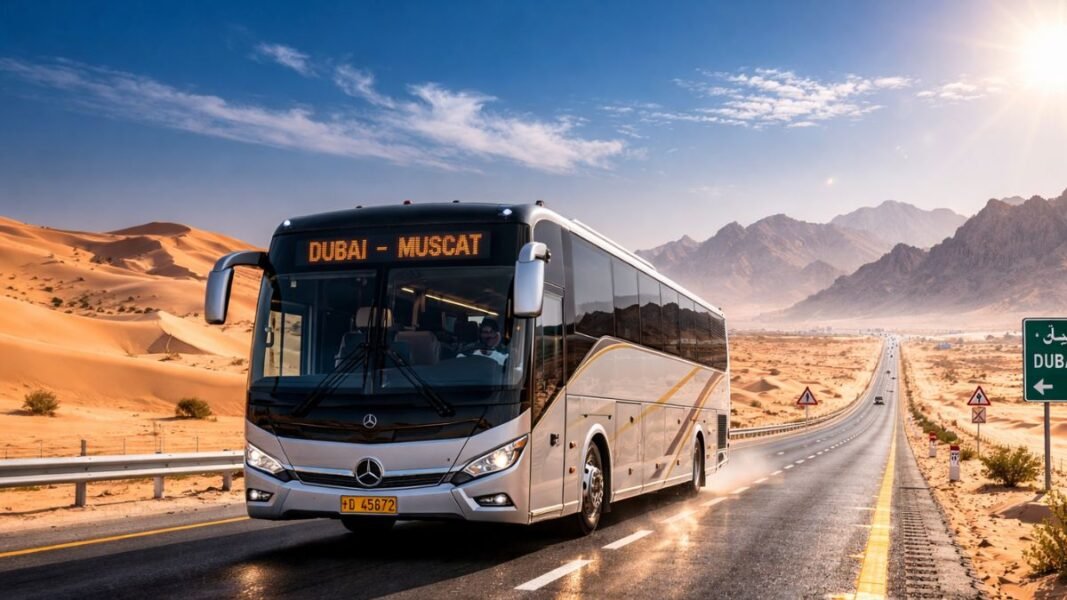
The most affordable way to make this journey is by bus, and the only company currently running a scheduled daily service between Dubai and Muscat is Al Khanjry Transport, an Oman-based operator. Dubai’s RTA suspended its own inter-city bus to Oman back in February 2023 and has not resumed it.
Al Khanjry runs three buses a day in each direction. From Dubai, buses depart at 7:00 AM, 3:00 PM, and 9:00 PM daily from Abu Hail Metro Station in Deira (near the DNATA Building). From Muscat, buses leave at 6:00 AM, 3:00 PM, and 9:00 PM from Athaiba Bus Station. A one-way ticket costs AED 100 from Dubai, or OMR 10 from Muscat. You’ll need your passport to purchase a ticket, and the coaches are air-conditioned with reclining seats and Wi-Fi.
The journey takes a minimum of 6 hours under normal conditions, though passengers have regularly reported 7 to 9 hours depending on how busy the border is. With current traffic levels at Hatta, the latter figure is more realistic.
Pro Tip: The 7 AM departure is widely recommended — it gives you the best chance of clearing the border before the midday rush builds.
One important note as of today, March 6, 2026: Al Khanjry’s live booking portal is showing that the Dubai–Muscat route is temporarily closed. You can call 0562049774 for the nearest bookings.
Option 2: Private Transfer — The Most Reliable Option Right Now
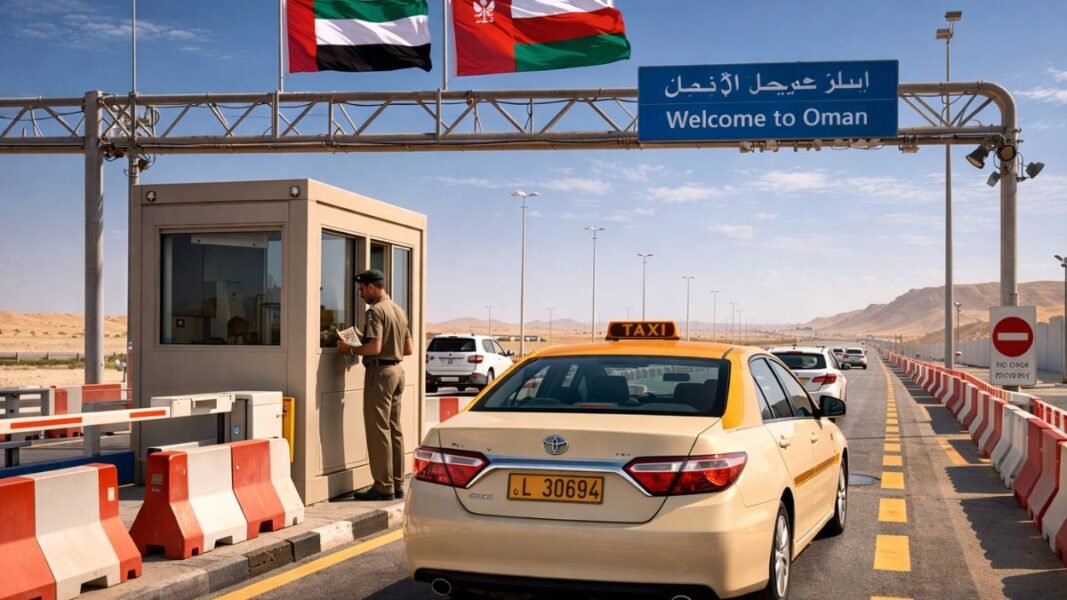
If you’re not confident about the Al Khanjry bus schedule given the current situation, or if you simply want a guaranteed door-to-door journey without any uncertainty, a licensed private transfer is the most dependable choice available right now.
This is not the same as booking a regular Dubai taxi. Standard taxis cannot legally cross into Oman; they are not authorised for cross-border commercial travel. What you need is a company that holds a tour certificate and has vehicles permitted for the UAE–Oman crossing. These operators use the same Hatta road and cross the same border, but handle all the paperwork for you, including the vehicle’s Oman motor insurance (the “Orange Card”), cross-border permits, and border documentation.
The cost is significantly higher than the bus, typically AED 1,500 to AED 2,100 or more, depending on vehicle type and number of passengers. Journey time is approximately 4.5 to 5.5 hours to Muscat, excluding border wait times.
When booking, always confirm that the quoted price includes fuel, UAE toll charges, and the Oman insurance. Operators like Life Way Tourism and LNK Oman are among the established names on this route.
Another thing you can do is book a taxi from Dubai to the Oman border and complete all procedures, and then book another taxi from the border to reach Muscat city or the airport. You can book these taxis either through online options or on arrival at the border as well.
Option 3: Drive Yourself
If the bus feels too uncertain and a private transfer is out of budget, self-driving is a perfectly viable option, and many people are doing exactly this right now to reach Muscat.
Driving your own car, then
- The first thing to check is whether your UAE motor insurance includes Oman.
- Many comprehensive UAE policies do cover Oman, so call your insurer before you leave.
- If yours doesn’t, you can purchase the Orange Card (Oman third-party insurance) at the Hatta border itself.
- As of January 2026, Oman’s Financial Services Authority slashed the Orange Card fee to just OMR 1 (approximately AED 10) — a significant drop from what it used to cost.
- You’ll also need to carry your original vehicle registration (Mulkiya). If someone else owns the car, then get a notarised NOC from the registered owner translated into Arabic.
If you’re renting a car, then –
- Not all rental companies allow cross-border travel into Oman. Confirm this explicitly before booking.
- Multinational rental agencies tend to be more flexible, often have branches in Oman, and can provide the necessary cross-border documentation.
- If the rental company hasn’t issued an Oman permit for the vehicle, the border officers will turn you back.
Follow E44 from Dubai toward Hatta, cross the border, then connect to Oman’s main highway network toward Muscat. Download an offline map before you cross; mobile data can be patchy in the mountain stretch between the border and the first major Omani town.
The Border Crossing: What Happens at Hatta, Step by Step
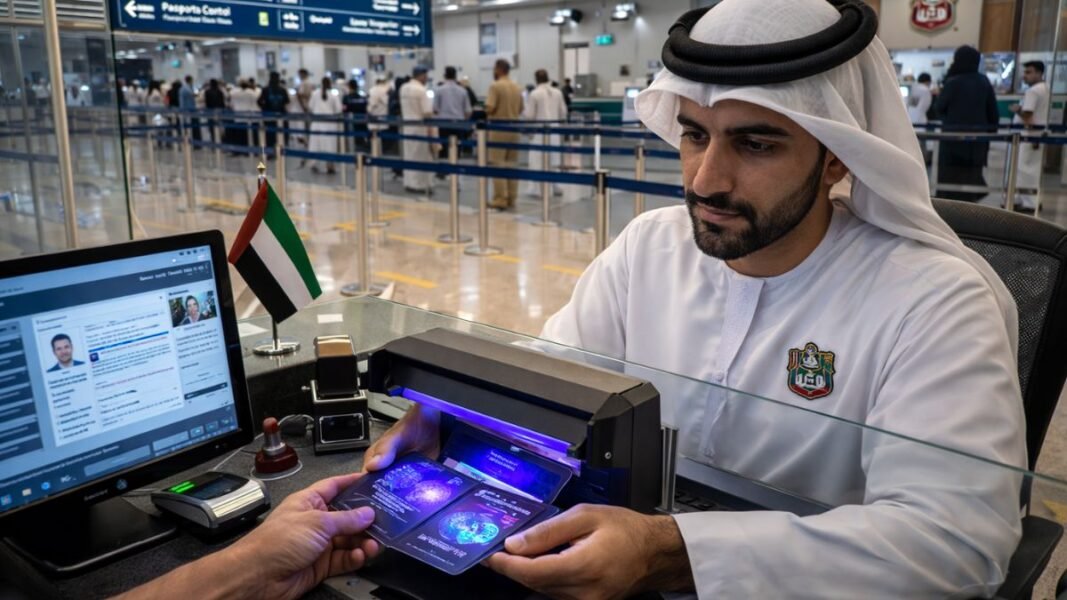
The crossing process at Hatta follows the same sequence. Here’s exactly what to expect.
- As you approach the UAE side, the first stop is the exit fee window, where you pay AED 35 per person, payable by cash or card.
- Keep the receipt, as you’ll need it at the next window for your UAE exit stamp.
- After your exit stamp, there’s a short 1 km stretch between the two countries.
- Drive through and proceed to the Omani checkpoint. Here, you will get your passport checked, and your visa will be verified (if you have an eVisa) or issued on the spot (if you’re eligible for a visa on arrival).
- One important detail: you have to pay for visa fees on the Oman side by card only, as cash is not accepted.
- Finally, Omani customs officers may carry out a brief vehicle and luggage inspection before waving you through.
Under normal conditions, the full process takes 30 minutes to an hour. Right now, with significantly heavier volumes, allow 90 minutes to 2 hours as a realistic buffer. Arriving before 7 AM or after 9 PM tends to mean shorter queues on any given day.
Visa: What You Need Before You Go
Getting your visa situation sorted before you leave is arguably the most important part of this entire journey.
- UAE Citizens and GCC Nationals need no visa at all. Entry to Oman is free and automatic.
- UAE Residents (Expats) have two main paths, and which one applies to you depends on your nationality and the occupation listed on your Emirates ID.
- The first is a visa on arrival at the border, valid for 14 days and costing OMR 5 (approximately AED 48). This is available to residents whose Emirates ID lists an occupation that falls within Oman’s approved profession list. Your passport must be valid for at least 6 months from the date of entry.
- The second is the Oman eVisa, applied for in advance through the Royal Oman Police portal at evisa.rop.gov.om. A standard tourist eVisa costs OMR 20 (approximately AED 75) and allows a stay of up to 30 days. Processing normally takes 4 to 5 working days. Given current conditions, applying well in advance is not just advisable, it’s essential.
- If your Emirates ID profession is listed as “Labourer,” “Domestic Helper,” or any category not on Oman’s approved list, you will need a sponsored visa arranged through a travel agent, the Oman Embassy, or a family member residing in Oman. Check your eligibility at evisa.rop.gov.om or call the Royal Oman Police contact centre on +968 2284820 before you travel.
For more Dubai travel guides, tips, and everything you need to navigate life in Dubai, keep exploring right here. Please verify the latest updates with the relevant authorities in Dubai.
FAQs
Yes. The Hatta–Al Wajajah border crossing is open and operational. The U.S. Embassy confirmed on March 3 that land borders with Oman are open, though with reports of congestion. Expect longer wait times than usual and plan your journey accordingly; early morning crossings are your best bet.
No. Standard Dubai taxis are not authorised to cross into Oman. You need to book through a licensed cross-border taxi, which will drop you at the Dubai – Oman border. Then, after completing all the procedures, you can book another taxi from the Oman border to reach your respective city.
It depends on your nationality and the occupation listed on your Emirates ID. UAE residents may be eligible for either a visa on arrival or a GCC resident eVisa — both are only available to certain approved professions. Always check your eligibility at evisa.rop.gov.om before you travel.
No, not if your overstay was caused by the current flight disruptions. The UAE announced it would waive visa overstay fines for travellers stranded due to the regional airspace closures, with exemptions effective from February 28, 2026. Keep any evidence of your cancelled flights or airline notifications handy in case you’re asked to show proof.
Under normal conditions, the journey takes around 5 to 6 hours, including border processing. Right now, with significantly heavier traffic at the Hatta crossing, you should budget for 7 to 9 hours. Going early in the morning gives you the best chance of a faster crossing.
Images: Wow Emirates Archives
Also Read: These Dubai Hotels Are Opening Their Doors to Stranded Travellers – March 2026