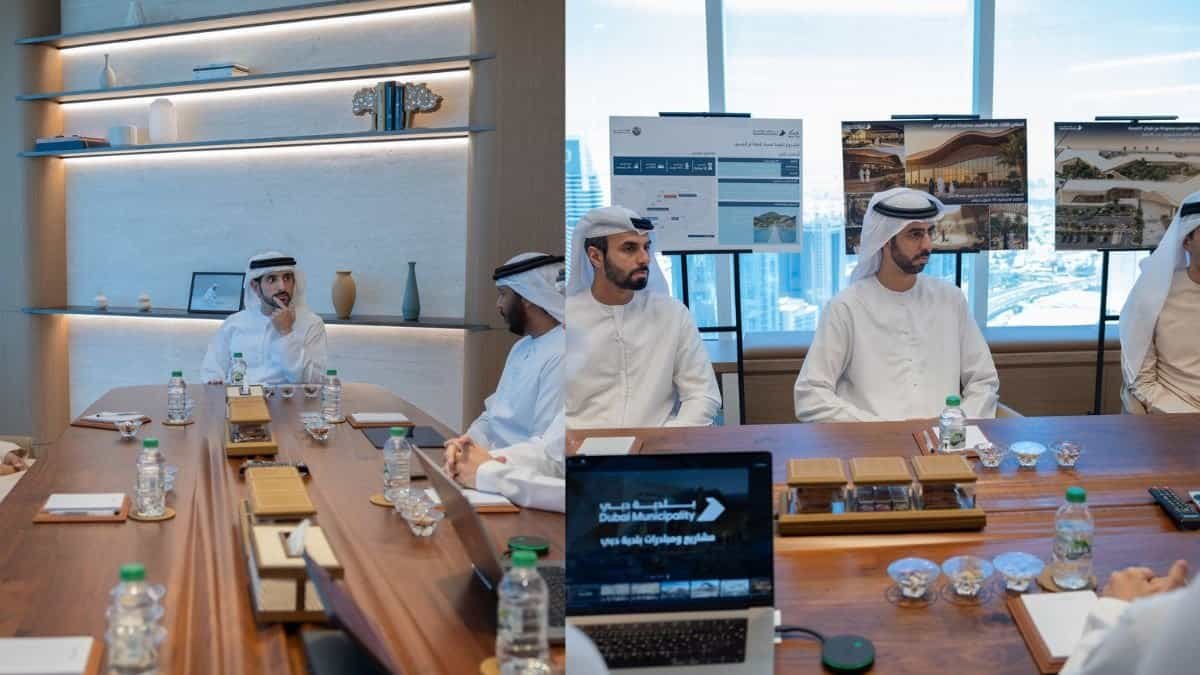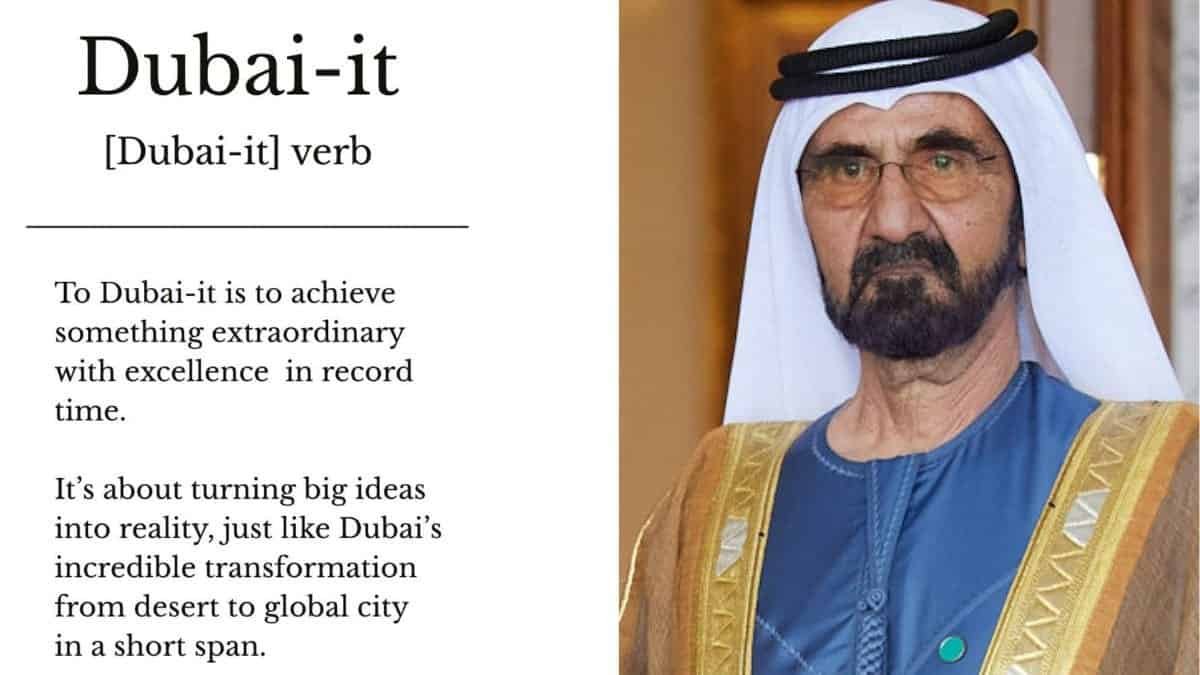
Dubai-it is the new initiative Sheikh Mohammed bin Rashid Al Maktoum, Vice President and Ruler of Dubai, launched on 17 June 2026, and he defined it as a verb: achieving the extraordinary with excellence in record time. In his own words, “Speed does not mean haste, quality does not mean slowness, and ambition has no value without execution.” The aim is to embed that fast, high-quality way of working across Dubai’s institutions and companies, and pass it to the next generation, according to the Dubai Media Office. Here is what Dubai-it means, why Sheikh Mohammed launched it, and the landmarks that were doing Dubai-it long before it had a name.
What does Dubai-it mean?
Dubai-it means doing something fast, at a high standard, with the result decided first and the timeline forced to keep up. Sheikh Mohammed framed it as a working philosophy for the whole city: speed without rushing, quality without slowing down, ambition that only counts once it is executed. It is less a slogan than a description of how Dubai already builds.
And it is the most Dubai thing imaginable, because you do not need a press release to see it. If you live here, you have been standing inside the proof for years. The clearest examples are not in a government plan, they are on the skyline. Here are the landmarks that were doing Dubai-it before it had a name, plus how to actually experience them. For more ideas, see our roundup of things to do in Dubai this summer.
Burj Khalifa: a new floor every three days
The tallest building on the planet went from an empty plot to a ribbon-cutting in six years. For long stretches of the build, the crews were adding roughly one floor every three days. Right up to opening night in January 2010 it was still called Burj Dubai, and the Burj Khalifa name was revealed at the ceremony itself. That is Dubai-it in a single tower: decide the outcome, then make the calendar keep up. Our full Burj Khalifa guide covers tickets, decks and timings.
Burj Khalifa
Area: Downtown Dubai
Best for: skyline views, sunset, dinner with a 122nd floor view
Tip: midweek is calmer than weekends on the observation decks
Map: Open in Google Maps
At.mosphere
Area: Level 122, Burj Khalifa, Downtown Dubai
Cuisine: contemporary European and grill
Pricing tier: fine dining
Tip: lunch is the quieter, better-value way to get the window seat
Map: Open in Google Maps
WOW-Dubai Expert Tip: Book the last daytime slot at the observation deck. You catch the skyline in daylight and then watch it light up, all on one ticket.
Palm Jumeirah: an island that did not exist
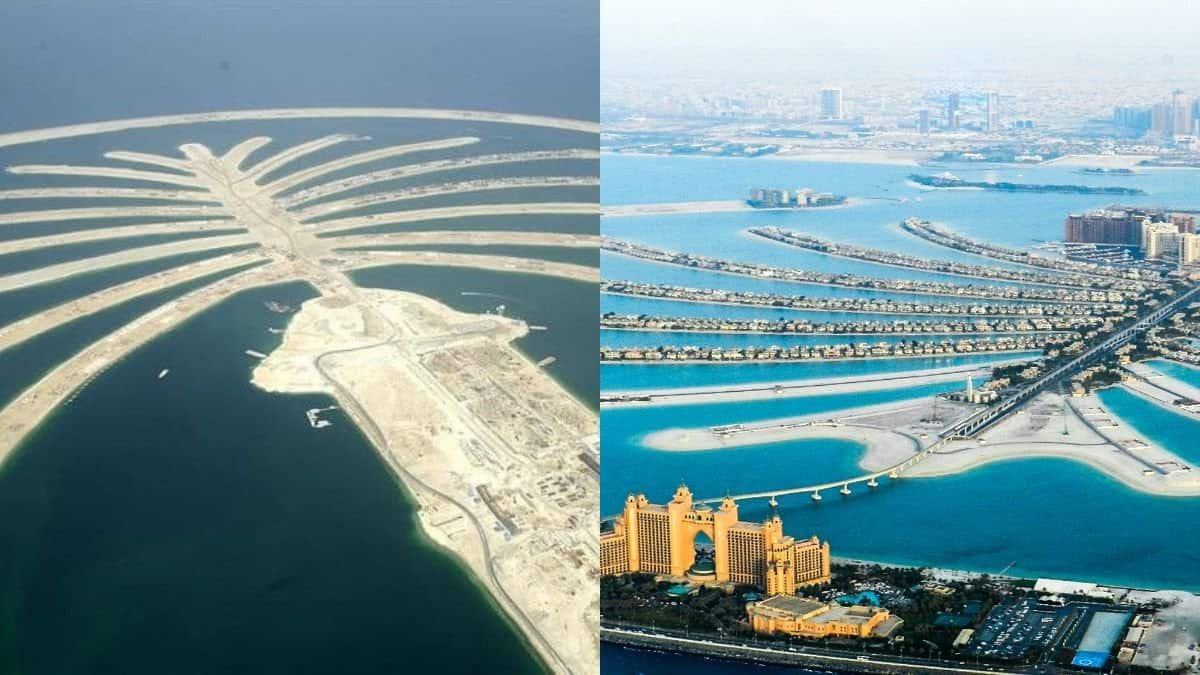
The Palm is not a neighbourhood that was developed. It is land that was invented. Work started in 2001, the reclamation finished ahead of schedule, and the whole palm shape was dredged into place with GPS-guided vessels using nothing but sand and rock. Within about five years, Dubai had a brand new coastline. Today it holds Atlantis The Royal, the One&Only resorts and some of the most sought-after addresses in the city, plus a run of beach clubs and day passes you can book without staying over.
Palm Jumeirah
Area: Palm Jumeirah
Access: public roads and monorail, resorts and beach clubs are paid
Best for: staycations, beach clubs, waterfront dining
Best time to visit: late afternoon into golden hour
Map: Open in Google Maps
Atlantis The Royal
Area: Palm Jumeirah
Best for: couples and families who want a showpiece stay
Standout: the sky pools, the dining lineup and the private beach
Map: Open in Google Maps
WOW-Dubai Expert Tip: Skip the drive and take the Palm Monorail at golden hour. The full front layout only really makes sense from above, and you never get that from street level.
Dubai-it in 2026: the speed has not slowed
This is not a museum piece. The same approach is still running today. In 2026 Dubai readied the world’s first eVTOL vertiport near DXB, the ground station for the air taxis that will start carrying passengers across the city, taking the idea from approval to a finished build on the same clock the Burj and the Palm ran on. See our full look at the Dubai Air Taxi Station for what is launching and when. The lesson is consistent across two decades: in Dubai, the deadline is the design brief.
Where to feel the Dubai-it spirit this week
You do not need a hard hat to get it. Book a table somewhere that opened in a single season, walk a waterfront like Dubai Marina that rose from open desert in about a decade, or plan a Palm staycation on an island that started life as a drawing. The speed is invisible by design, and that is the whole point Sheikh Mohammed was making with Dubai-it.
Dubai-it FAQ
Dubai-it is an initiative launched by Sheikh Mohammed bin Rashid Al Maktoum to embed Dubai’s culture of fast, high-quality execution across the emirate’s institutions and companies, according to the Dubai Media Office.
Sheikh Mohammed defined Dubai-it as a verb: achieving the extraordinary with excellence in record time. Speed without rushing, quality without slowing down, and ambition that only counts once it is executed.
Sheikh Mohammed bin Rashid Al Maktoum, Vice President and Ruler of Dubai, launched Dubai-it on 17 June 2026.
To make Dubai’s way of working, fast delivery at a high standard, a repeatable culture rather than a one-off, and to pass that mindset on to the next generation of the city’s workforce and institutions.
Yes. Sheikh Mohammed deliberately framed Dubai-it as a verb, a way of describing the act of getting something done quickly and excellently, rather than as a department or a policy document.
The Burj Khalifa, built at roughly a floor every three days, Palm Jumeirah, reclaimed from the sea in about five years, and the 2026 Dubai Air Taxi Station are landmarks that show the Dubai-it approach in physical form.
Images: official websites
Updated 20 June 2026.
Also Read: Malgudi Comes to the Emirates: Shankar Mahadevan’s South Indian Love Letter Lands in Dubai