The UAE has about 4.3 million Indian residents, the largest expat community in the country. Plus thousands more passing through as tourists or transit passengers on any given week. When the airports went quiet, many stranded Indians in Dubai had nowhere to go. Hotels either had no rooms or were gouging on rates. Mamta Jain, a Mumbai resident who had arrived on February 25 and was supposed to fly home March 1, put it plainly: “We did not know what to do. Hotels were either full or too expensive.”
That’s when a few people stepped in. The Indian businessmen helping stranded Indians in Dubai in 2026 during the Middle East war weren’t running official relief programmes. They just had space and decided to use it. Here’s what they actually did.
Yogesh Doshi – The man who opened 64 Apartments

Yogesh Doshi runs Al Mizan Group, a Dubai-based real estate firm. When the crisis hit, he opened his entire 64-unit residential building to stranded Indians in Dubai for free, with food included. He looped in the Indian People’s Forum UAE and the Consulate General of India in Dubai to handle the intake, which kept things orderly. Over 125 people stayed there, including families with young children.
Doshi did not issue a press release. The consulate spread the word.
Dhiraj Jain Opened His Farmhouse in Ajman
In Ajman, about 30 kilometres from Dubai, Dhiraj Jain had a different kind of property to offer. His farmhouse is 80,000 square feet. By early March, it was housing nearly 300 stranded Indians in Dubai.
Jain is from Rajasthan and runs 1XL Holdings. The farmhouse is private, not a hotel, not a commercial venue. He opened it anyway, setting up mattresses and blankets in the indoor halls and pitching tents on the grounds when the rooms filled up. Meals were free. A help desk was set up. Separate quarters were designated for women. There was a basic health facility on site.
He also sent cars to collect people who had no way to get there. 11 vehicles in total, six of them Rolls-Royces. His explanation to The Hindu: “People needed a place to stay. We had space. It was that simple.”
Mamta Jain, one of the stranded Indians in Dubai, ended up at the farmhouse after her hotel situation collapsed. Her flight got rebooked for March 9. She had one thing to say about her time there: “We were stressed. Now, we are not.”
On March 9, Anand Mahindra posted about Dhiraj Jain on X:
When recent flight disruptions left several Indian families stranded in Dubai, Dhiraj Jain opened the doors of his farmhouse and welcomed them in.
— anand mahindra (@anandmahindra) March 9, 2026
A wonderful reminder that the Indian ethos of “Atithi Devo Bhava” should travel with us wherever we go.
Sometimes all it takes is… pic.twitter.com/QNUC4PUBg1
Atithi Devo Bhava translates as “the guest is God.” It gets quoted a lot.
Heena Patel Opened Her Apartment Near Dubai International Airport
Heena Patel, a Dubai resident who lives near Dubai International Airport, offered her apartment to stranded Indians in Dubai with children. No organisation behind it, no announcement beyond telling people she had space. She described her thinking simply: kindness and community solidarity matter more than fear in a crisis. Her apartment was close to the airport practically useful, which was the point.
Dr Vishrut Singh Opened The Doors Of His Apartment
Across town in Business Bay, Dr Vishrut Singh, a paediatrician at Aster Clinic in Bur Dubai, posted his personal phone number online. He informed stranded travellers in Dubai that they can stay at his apartment in Paramount Damac Towers. A doctor handing out his number and his home address to strangers during a regional war. CN Traveller Middle East and Brut both picked up his story as part of their coverage of Dubai residents who opened up.
Arabnb Founders Offered an Apartment for Free
Then there was Arabnb. Hreshan Raheja and Pranay Manghnani run a Dubai holiday home rental company. On the Saturday night after the airspace closed, they posted on social media: stranded in Dubai? We’ll give you an apartment, free. The post reached around 300,000 people. Within five hours, every vacant unit they had was taken by about six to seven families. The story didn’t stop there. Arabnb is part of a network of roughly 250 holiday home super-hosts across Dubai, and many of them saw the post and opened their own units independently. Arabnb also teamed up with Livjaza, another UAE holiday-home platform, to redirect families they couldn’t accommodate.
Raheja later said the response within the host community had been overwhelming, with people reaching out to say they had a spare room, an empty flat, or a place someone could sleep.
India’s official response
The Ministry of External Affairs opened 24/7 helplines. The Indian consulate in Dubai ran daily public advisories. Air India Express operated special flights from Ras Al Khaimah — an alternative airport further from the disruption — to Delhi, Kochi, and Mumbai. IndiGo offered free rescheduling and full refunds on any Middle East booking made before February 28.
By March 7, over 52,000 Indians had made it home from the Gulf. Around 32,000 flew on Indian carriers.
The Spirit of Atithi Devo Bhava
For many Indians, the phrase “Atithi Devo Bhava” is not just a cultural slogan, but a deeply ingrained philosophy of hospitality and care for guests. Dhiraj Jain’s response to the crisis exemplified this principle. By welcoming expats and strangers into his home, he showed how traditional values can inspire acts of modern generosity, even when far from home.
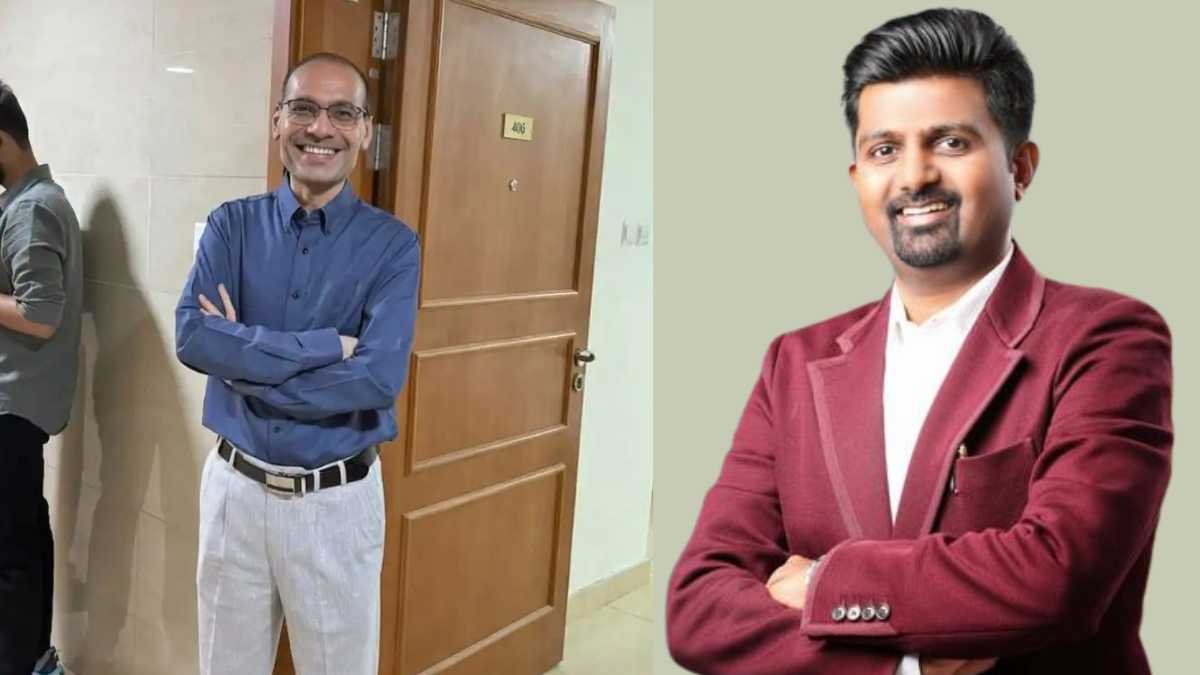
Images: Official Instagram handles of Yogesh Doshi & Dhiraj Jain
Also Read: UAE Overstay Fine Waiver 2026: Who Qualifies and How to Check Your Visa Status